
Gel Injections for Bone-on-Bone Knees
Think your knees are "too far gone" for anything but surgery? You may be wrong. Gel injections (viscosupplementation) have helped thousands of patients with bone-on-bone arthritis find relief—without surgery.
- Works for Severe Arthritis - Even bone-on-bone patients see results
- 6+ Months of Relief - Longer lasting than cortisone
- Medicare Covered - Little to no out-of-pocket for most
Are Gel Injections Right for You?
Even with bone-on-bone arthritis, you may qualify
Medicare Covers Gel Injections
Free coverage verification—no obligation
Your information is secure and will never be shared.





"My Doctor Said I'm Bone-on-Bone—Is It Too Late for Gel Injections?"
This is one of the biggest misconceptions we hear. Many patients believe that once they're "bone-on-bone," their only option is knee replacement surgery. The truth is that gel injections can still provide significant relief—even for advanced osteoarthritis.
- Gel provides cushioning even when cartilage is gone
- Many bone-on-bone patients delay or avoid surgery
- FDA-approved specifically for knee osteoarthritis
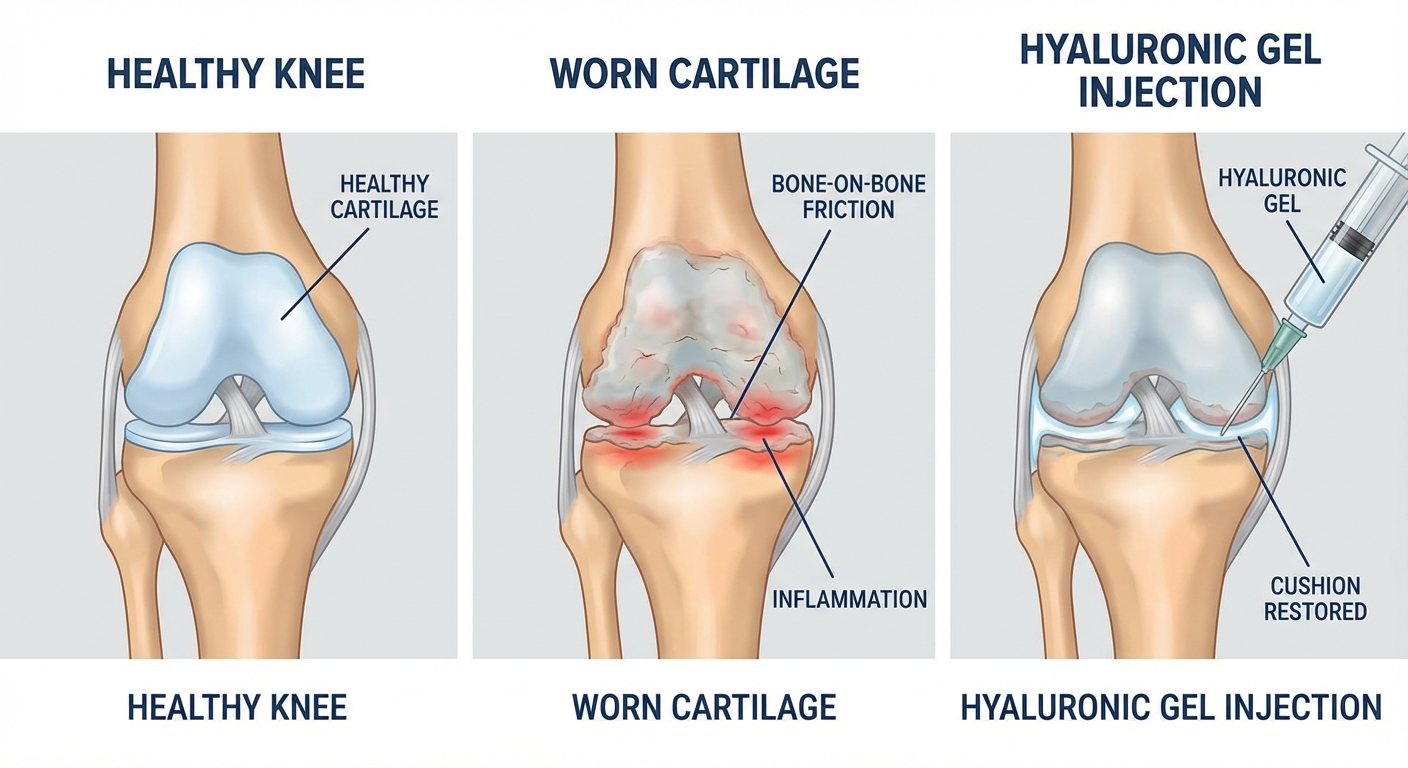
How Gel Injections Restore Your Knee Function
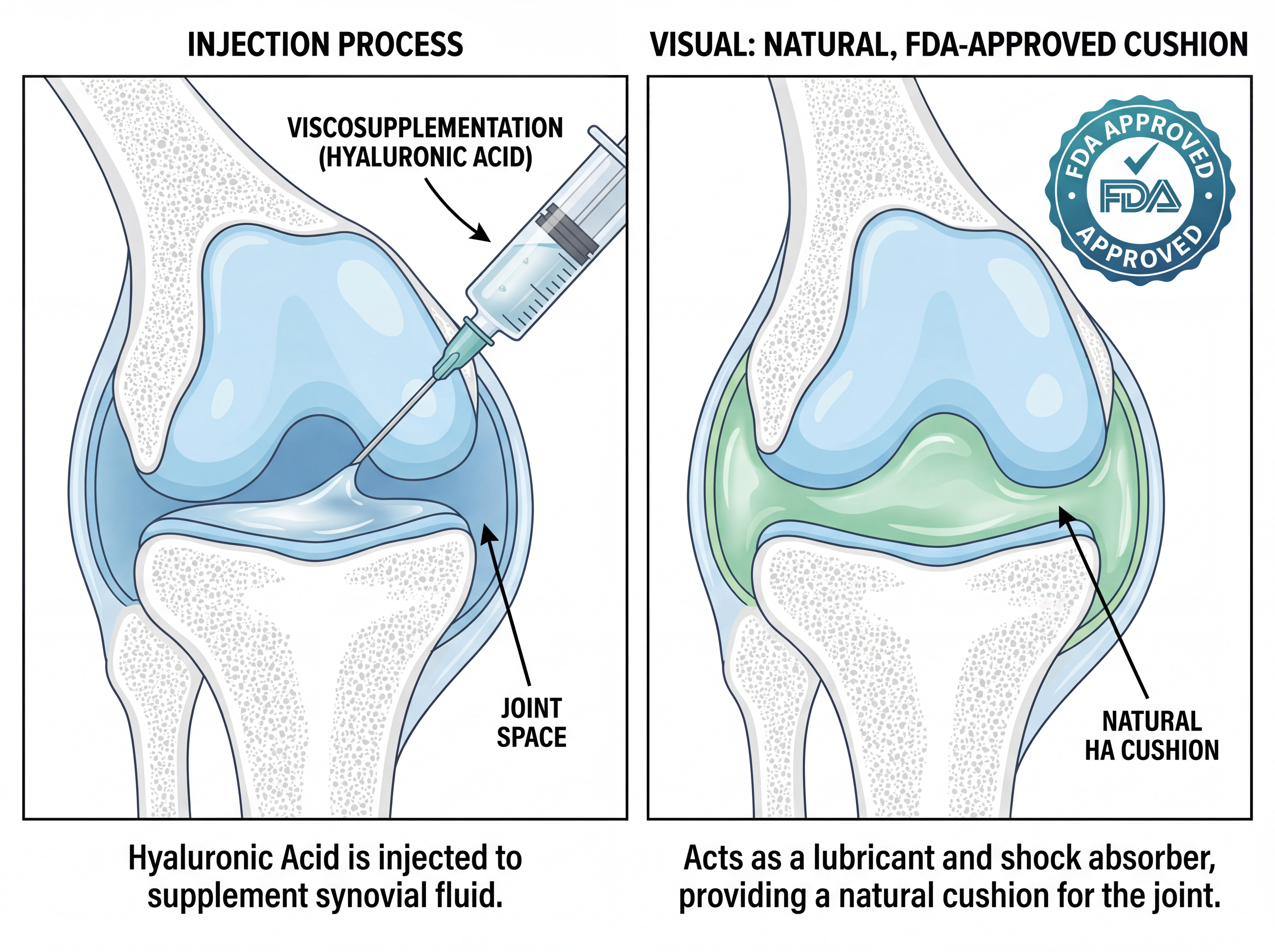
Hyaluronic acid gel acts as a lubricant and shock absorber, providing a cushion between bones even when natural cartilage has worn away.
Evaluation
Board-certified physician examines your knee and reviews imaging to confirm you're a candidate for gel injections.
Injection
Using fluoroscopy (live X-ray), gel is injected directly into the joint space for precise placement.
Relief
The gel provides cushioning and lubrication, reducing bone-on-bone friction and pain for 6+ months.
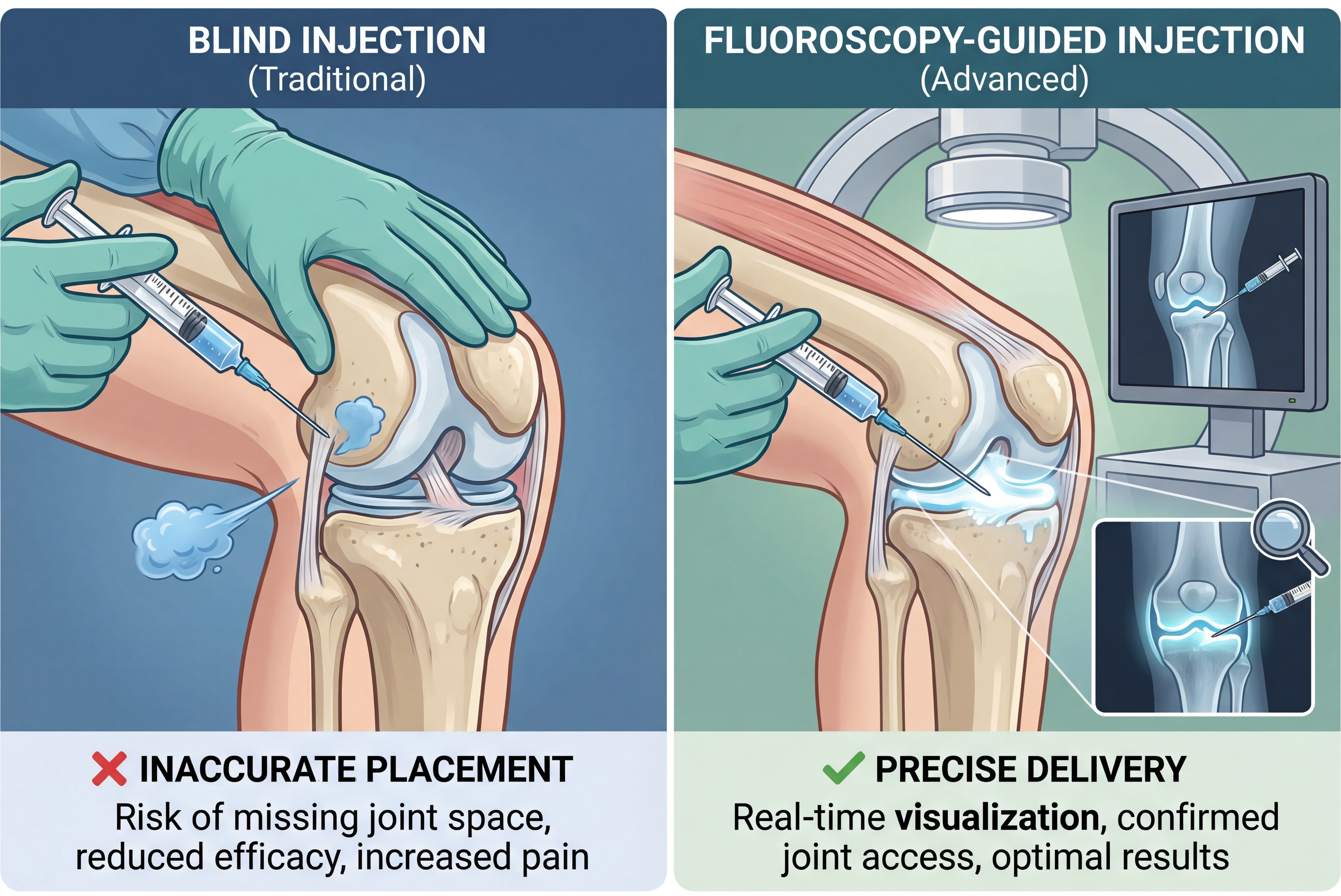
Why Fluoroscopy Makes Gel Injections More Effective
Many clinics give gel injections "blind"—without imaging guidance. At Joint Relief Institute, we use fluoroscopy (live X-ray) to ensure the gel goes exactly where it needs to for maximum benefit.
- Precision placement — Critical for bone-on-bone knees where space is limited
- Better results — Studies show image-guided injections are more effective
- Less discomfort — Accurate placement means less irritation
Gel Injections vs. Cortisone: What's the Difference?
If cortisone shots have stopped working for your bone-on-bone knees, gel injections offer a different approach.
| Feature | Gel Injections (Viscosupplementation) | Cortisone Shots |
|---|---|---|
| How It Works | Adds cushioning & lubrication | Reduces inflammation |
| Duration of Relief | 6+ months | Weeks to months |
| Repeat Treatments | No limit | Limited (3-4/year) |
| For Bone-on-Bone | Effective | Limited benefit |
| Medicare Coverage | Yes | Yes |
What Is Hyaluronic Acid Gel?
The "gel" in gel injections is hyaluronic acid (HA)—a naturally occurring substance already present in your joint fluid. When osteoarthritis wears away cartilage, your natural HA decreases, leading to bone-on-bone friction and pain.
- FDA-approved — Clinically proven for knee osteoarthritis
- Restores lubrication — Supplements depleted joint fluid
- Multiple brands available — Synvisc, Euflexxa, Supartz, and more
Specialized Gel Injection Experts
We've performed 400K+ gel injections. That experience matters—especially for bone-on-bone cases.

Medicare Covered
Gel injections are covered by Medicare for eligible patients with osteoarthritis.
No Surgery Required
A non-surgical alternative that works even for advanced arthritis and bone-on-bone knees.

Long-Lasting Relief
Many patients experience relief for 6 months or longer with gel injection therapy.

Free Assessment
Find out if gel injections are right for your bone-on-bone knees—no obligation.
Don't Let "Bone-on-Bone" Keep You From Living Your Life
Thousands of patients who were told they needed knee replacement have found relief with gel injections. Find out if you're a candidate—the consultation is free, and Medicare covers the treatment for eligible patients.
Gel Injection FAQs for Bone-on-Bone Knees
Yes, gel injections (also called viscosupplementation or hyaluronic acid injections) can provide relief even for patients with advanced osteoarthritis and bone-on-bone contact. The gel acts as a cushion and lubricant, reducing friction and pain even when cartilage is severely worn. Many patients who thought they were "too far gone" for non-surgical treatment have found significant relief with gel injections.
Gel injections use hyaluronic acid—a naturally occurring substance in your joint fluid—to supplement your knee's natural lubrication. When injected into the joint, this FDA-approved gel provides cushioning, reduces bone-on-bone friction, and may help stimulate your body's own healing response. They're also known as viscosupplementation, gel shots, or HA injections.
Cortisone shots reduce inflammation temporarily but don't address the underlying cause of bone-on-bone pain. Gel injections actually supplement your joint fluid, providing physical cushioning between bones. The effects of gel injections typically last much longer (6+ months) compared to cortisone (weeks to months), and gel doesn't have the same limitations on frequency of use.
Medicare Part B typically covers gel injections (viscosupplementation) for knee osteoarthritis when deemed medically necessary. Coverage may apply even for advanced bone-on-bone cases. We verify your specific coverage before treatment so you know exactly what to expect with no surprise bills.
Many patients are able to delay or avoid knee replacement surgery with gel injection therapy. While gel injections don't regrow cartilage, they can provide significant pain relief and improved mobility that allows you to stay active. Some patients continue with periodic gel treatments for years instead of opting for surgery.
Most patients experience relief for 6 months or longer from a series of gel injections. Some patients report relief lasting up to a year. The treatment can be repeated when benefits begin to diminish, making it a sustainable long-term option for managing bone-on-bone knee pain.